MediaWell curates the most recent and innovative scholarship on technology and information integrity. Our fall syllabus highlights some of the questions and conversations taking place against a backdrop of large-scale technological change, from democracy in the age of AI and the human costs of rapid expansion to the future of the digital sphere – what alternatives could look like, and what it would take to build them.
Full citations can be found in our Zotero Library.
State of the Field
Information integrity research is at a crossroads. A decade has passed since the surge of attention to mis- and disinformation in the mid-2010s – and now, as funding priorities shift, data access dissipates, and generative AI reshapes the information ecosystem as we know it, scholars are reassessing What has the field learned? And where should it go next? Ophir et al. (2025) offer a large-scale retrospective of how misinformation research has evolved in communication studies; Ecker et al. (2025), Altay & Mercier (2026), and Tay et al. (2026) engage in a multi-part debate on how psychology should approach misinformation – as a symptom of deeper issues like mistrust and polarization, a driver of them, or somewhere in a more complex web between belief and behavior. Ong & Jackson (2026) critique the frameworks that counter-disinformation funders have relied on over the last decade as fundamentally disconnected from the Global South, emphasizing instead the need for community-driven and hyperlocal interventions. Milzner et al. (2025) note the need for cross-platform, multilingual analysis to better understand the coordinated disinformation campaigns that take place across social media – de Vreese & Tromble (2026) and Ohme & Seiling (2026) evaluate scholars’ ability to do so, examining the state of public-interest access to data and platform resistance to regulation.
- Altay, Sacha, and Hugo Mercier (2026). “Misinformation Is a Symptom: Commentary on Ecker et al. (2025).”
- de Vreese, Claes H., and Rebekah Tromble (2026). “Moving Targets, Moving Politics: The State of Play in Social Media Data Access.”
- Ecker, Ullrich K. H., Li Qian Tay, Jon Roozenbeek, Sander van der Linden, John Cook, Naomi Oreskes, and Stephan Lewandowsky (2025). “Why Misinformation Must Not Be Ignored.”
- Ohme, Jakob, and LK Seiling (2026). “Finally, Access: How Article 40 DSA Changes Platform Research in Practice.”
- Ong, Jonathan Corpus, and Dean Jackson (2026). “What Counter-Disinformation Funders Got Wrong: Global South Critiques of the Field.”*
- Ophir, Yotam, Dror Walter, Ayse Lokmanoglu, and Nathan Walter (2025). “Media Matters: A Mixed-Method Look into the Research on Misinformation and Communication over 30 Years.”
- Milzner, Miriam, Daniel Thiele, and Baoning Gong (2025). “Just the Tip of the Iceberg? State of the Art of Coordinated Social Media Manipulation Research.”
- Tay, Li Qian, Sander van der Linden, Jon Roozenbeek, John Cook, Naomi Oreskes, Stephan Lewandowsky, and Ullrich K. H. Ecker (2026). “Misinformation Is Both a Symptom and a Cause: Reply to Altay and Mercier (2026).”
* More from these authors: “The Global Majority Has its Own Counter-Disinformation Agenda.”
Infrastructures & Impacts
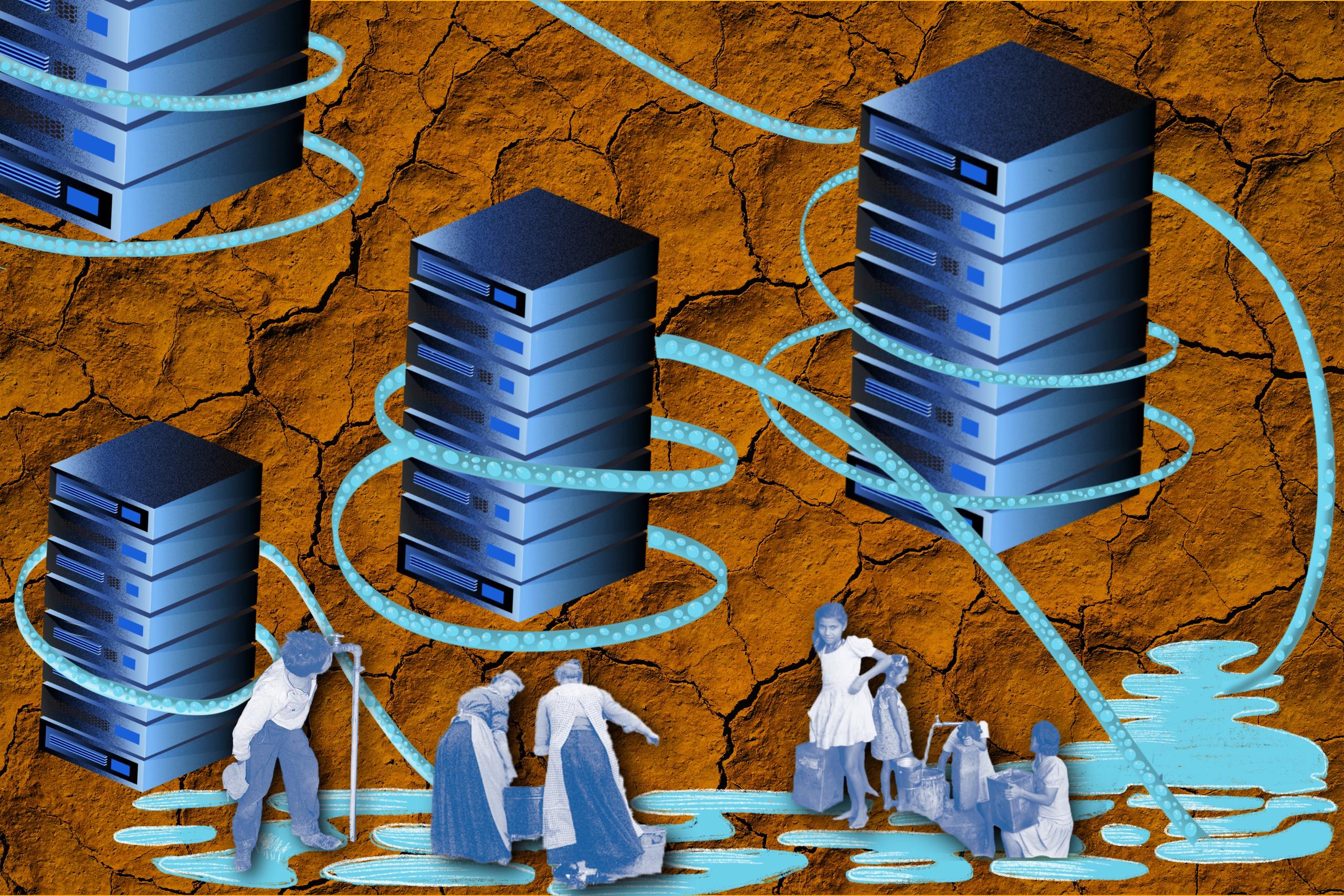
What are the physical impacts of our digital world? As emerging technologies require greater resources — from the spaces they occupy to the water and energy used to power them — these pieces unpack the human, social, and environmental trade-offs of the race to move fast and break things. Bridges (2024) and Vildivia (2025) take on big-picture concepts around exponential digital growth, offering new frameworks for scholars and policymakers alike. Fardi (2026) examines how the material and spatial realities of cloud computing are reshaping cities, while Murphy & Brodie (2026) provide an on-the-ground look at data center activism through the case of Ireland. Lambert & Luccioni (2026) and Domingo & Shomar (2026) take stock of how research understands the environmental and public health impacts of AI. Paris (2026) encourages readers to imagine a fundamentally different Internet where infrastructures are built to meet public needs.
- Bridges, Lauren E (2024). “Competing Digital Capacities: Between State-Led Digital Governance and Local Data Center Tradeoffs.”
- Domingo, Jose L., and Basem Shomar (2026). “Artificial Intelligence’s Hidden Environmental and Public-Health Risks: Should AI Be Considered a Public Health Threat?”
- Fard, Ali (2026). Grounding the Cloud: Urbanism in the Shadow of Data.
- Lambert, Katherine, and Sasha Luccioni (2026). “From Cradle to Cloud: A Life Cycle Review of AI’s Environmental Footprint.”
- Murphy, Dylan, and Patrick Brodie (2026). “Canary in the Data Mine: Irish Data Centre Activism amid Planetary Flows, Frictions and Antagonism.”
- Paris, Britt S. (2026). Radical Infrastructure: Imagining the Internet from the Ground Up.*
- Valdivia, Ana (2025). “The supply chain capitalism of AI: a call to (re)think algorithmic harms and resistance through environmental lens.”
* More from this author: MediaWell’s book interview with Britt Paris.
Digital Authoritarianism & Democratic Backsliding
The GenAI era has redrawn the lines connecting data and democracy, accelerating the spread of authoritarian tactics through the digital sphere (Beacken et al. 2026; Biancalana & Montigny 2026; G’sell 2026). Expert voices face both real and artificially amplified threats (Hameleers & van der Meer 2025); major social media platforms have become vehicles for mainstreaming illiberal ideologies (Magalhães et al. 2026); and, as technology evolves, anti-democratic actors have gained a new toolkit for censorship, information control, and mass surveillance – with a “chilling effect” on citizens’ rights and freedoms around the world (Penney 2025; Coeckelbergh 2026). But this trend is neither inevitable, nor irreversible. Fuchs et al. (2026) and Noveck (2026) explore the safeguards that can help push digital technologies towards strengthening democracy rather than undermining it.
- Beacken, Gabrielle D, Inga K Trauthig, and Samuel C Woolley (2026). “Generative AI, Propaganda, and Digital Authoritarianism: Comparative Insights from Six Democratically Weakened Countries.”
- Biancalana, Cecilia, and Eric Montigny, eds (2026). Artificial Democracy: The Impact of Big Data on Politics, Policy, and Polity.
- Coeckelbergh, Mark (2026). “Technofascism: AI, Big Tech, and the New Authoritarianism.”
- Fuchs, Christian, Kevin Friesch, and Joel Museba (2026). “Digital Futures Between Participatory Digital Democracy and Participatory Digital Fascism.”
- G’sell, Florence (2025). “Digital Authoritarianism: From State Control to Algorithmic Despotism.”
- Hameleers, Michael, and Toni van der Meer (2025). “The Implications of Epistemic Polarization and Factual Relativism for Misinformation Research and Democracy.”
- Magalhães, João C., Clara Iglesias Keller, and Robert Gorwa* (2026). “The Great Sysop: Elon Musk, X, and the Emergence of Platform Illiberalism.”
- Noveck, Beth Simone (2026). Reboot: AI and the Race to Save Democracy.
- Penney, Jonathon W (2025). Chilling Effects: Repression, Conformity, and Power in the Digital Age.
* More from this author: “The Informal Future of Transnational Digital Governance.”
Digital (Dis)connection
What does connection look like in today’s digital world? If social media hasn’t held up to its promise of acting as a “global town square” (Robinson 2026) — or, indeed, of being a social technology at all (boyd 2026) — what have we arrived at instead? Marwick (2026) remembers the Internet of the early 2000s, arguing that the current generation of algorithmically optimized platforms stifles the kind of meaningful social ties that legacy websites used to foster — and calling for the next generation not to replicate those sites, but reimagine how to make small-scale, authentic communities possible again. Hall (2025) grapples with pathways to increase feelings of belonging in the present social media environment, challenging the idea that platforms cause loneliness. In the GenAI era, however, platforms are only part of the equation (Sloane 2026). Muldoon & Parke (2025) explore the commodification of intimacy through AI companions, which are further complicated by sycophantic models (Cheng et al. 2026) and addictive design (Al-Obaydi et al. 2025).
- Al-Obaydi, Liqaa Habeb, and Marcel Pikhart (2025). “Artificial Intelligence Addiction: Exploring the Emerging Phenomenon of Addiction in the AI Age.”
- boyd, danah (2026). “Social Media Is Now Parasocial Media.”
- Cheng, Myra, Cinoo Lee, Pranav Khadpe, Sunny Yu, Dyllan Han, and Dan Jurafsky. 2026. “Sycophantic AI Decreases Prosocial Intentions and Promotes Dependence.”
- Hall, Jeffrey A (2025). “Loneliness and Social Media.”
- Marwick, Alice E. (2026). “Broken Connections: Fieldnotes from the Old Internet.”
- Muldoon, James, and Jul Jeonghyun Parke* (2025). “Cruel Companionship: How AI Companions Exploit Loneliness and Commodify Intimacy.”
- Robinson, Jessica Yarin (2026). “The Global Village Is Here, Just Not Like We Expected: Transnational Politics on Social Media and the Rise of Networked Cosmopolitanism.”
- Sloane, Mona (2026). Predicted: How AI Is Restructuring Social Life.
* More from this author: “Like & Subscribe: Influencers and the Shift to Parasocial Authority.”
Climate & Environmental Information
Out of all the issues in the information integrity space, climate disinformation may be one of the most challenging: a combination of global corporate lobbies, attacks on science, and urgent, accelerating stakes (Bruni & Lefsrud 2026). It’s also changing. Beyond the climate denial narratives of the last few decades, “strategic skepticism” has become the main way for disinformation actors to sow doubt in meaningful solutions, often by targeting policymakers directly (IPIE 2025) — with especially acute impacts in parts of the Global South, where high climate vulnerability intersects with already-stressed information environments (Locatelli et al. 2026). As extreme weather events become more frequent, how does this “new denial” affect disaster responses (Daume 2024; Armstrong & VanDyke 2026)? And how can governments, local leaders, and civil society effectively respond (Roberts et al. 2025; C40 2025; SCIICC 2026)?
- Armstrong, Cory L., and Matthew S. VanDyke (2026). “Verify, Accept, or Ignore: The Complexities of Media Trust Along Southeastern U.S. Coastal Communities During Severe Weather Events.”
- Bruni, Elena, and Lianne M. Lefsrud, eds (2026). Organized Science Denial: An Action Plan for Solutions.
- C40 Cities and the Global Covenant of Mayors for Climate & Energy (2025). Extreme Weather Disinformation Playbook: How to Protect People and Information Integrity during Climate Crises.
- Daume, Stefan (2024). “Online Misinformation during Extreme Weather Emergencies: Short-Term Information Hazard or Long-Term Influence on Climate Change Perceptions?”
- International Panel on the Information Environment (2025). Information Integrity about Climate Science: A Systematic Review.
- Locatelli, Marcelo Sartori, Wenchao Dong, Pedro Loures Alzamora, Pedro Dutenhefner, Wagner Meira Jr., Meeyoung Cha, and Virgilio Almeida (2026). “Mapping Emerging Climate Misinformation Playbooks in the Global South.”
- Roberts, J. Timmons, Carlos R. S. Milani, Jennifer Jacquet, and Christian Downie, eds (2025). Climate Obstruction: A Global Assessment.
- Select Committee on Information Integrity on Climate Change and Energy, Canberra (2026). The Integrity Gap: Restoring Trust in the Climate and Energy Debate.
Social Media Bans & Child Online Safety
Youth social media bans have been passed in almost a dozen countries since late 2025, and they’re under debate in dozens more (Vigil et al. 2026). What do these restrictions look like in practice? What are the harms they are trying to mitigate (Mutu & Pătraș 2026; Lee et al. 2026; Chen et al. 2026), and what does their enforcement mean for data and privacy online (Rescorla et al. 2026)? Gerrard (2025), Chhabra et al. (2025) and Abidin (2026) take stock of how children navigate the digital sphere, from mental health and body image to going viral; Ma et al. (2026) examine the unique impacts of misinformation on younger users. Barnes et al. (2026) examine early data from Australia to ask whether social media bans are succeeding at creating a safer digital space.
- Abidin, Crystal (2026). Child Influencers: How Children Become Entangled with Social Media Fame.
- Barnes, Courtney, Alix Hall, Stephanie Mantach, Christopher Oldmeadow, John Attia, Kathryn Backholer, Carmel Williams, et al (2026). “Assessing Early Effects of Australia’s Social Media Minimum Age Act on Adolescents’ Social Media Use: Observational Study.”
- Chen, Yixin, Yue Fu, Zeya Chen, Jenny Radesky, and Alexis Hiniker (2026). “The Engagement-Prolonging Designs Teens Encounter on Very Large Online Platforms.”
- Chhabra, Jasleen, Vita Pilkington, Ruben Benakovic, Michael James Wilson, Louise La Sala, and Zac Seidler (2025). “Social Media and Youth Mental Health: Scoping Review of Platform and Policy Recommendations.”
- Gerrard, Ysabel (2025). The Kids Are Online: Confronting the Myths and Realities of Young Digital Life.
- Lee, Angela Yuson, Carmen Hui Jing Lim, Xun Liu, Kang-Xing Jin, Anneke Buffone, Ravi Iyer, Zachary M Rausch, et al (2026). “Measurement of American Adolescents’ Experiences of Online Harms: A Nationally Representative Survey.”
- Ma, Ili, Mubashir Sultan, Anastasia Kozyreva, and Wouter van den Bos (2026). “Understanding the Impact of Misinformation on Adolescents.”
- Mutu, Adriana, and Luminița Pătraș (2026). “TikTok, Child Safety, and the Digital Services Act: An Empirical Analysis of Online Harm Mitigation.”
- Rescorla, Eric, Zander Arnao, and Alissa Cooper (2026). Age Assurance Online: A Technical Assessment of Current Systems and Their Limitations.
- Vigil, Samantha L., Matthew Shawcroft, Drew P. Cingel, Sarah M. Coyne, Sonia Livingstone, and Jane Shawcroft (2026). “The Youth Digital Policy Repository: A Tool for Tracking Digital Media Legislation Aimed at Minors.”
AI & Information Integrity
Artificial intelligence is reshaping the global information environment in ways that research is just beginning to understand — and as new models, tools, and technologies emerge on a near-daily basis, so do questions about their impact. When do audiences trust AI-generated content (Toff & Simon 2025; Cools et al. 2026; Ou et al. 2026; Ptaszek & Metzger 2026)? What do we actually know about its effect on political beliefs and behavior (Nyhan et al. 2026), and where are the evidence gaps in current research (IPIE 2026)? How can AI help improve access to reliable information (Larraz et al. 2025; Leippold et al. 2025; Park et al. 2026), and how do those opportunities stack up against the risks of existing designs (Alber et al. 2025; Alyukov et al. 2025; Bontcheva 2024; DeVerna et al. 2026; Jang et al. 2026; Gondwe 2025; Mattis & de Vreese 2025)?
- Alber, Daniel Alexander, Zihao Yang, Anton Alyakin, Eunice Yang, Sumedha Rai, Aly A. Valliani, Jeff Zhang, et al (2025). “Medical Large Language Models Are Vulnerable to Data-Poisoning Attacks.”
- Alyukov, Maxim, Mykola Makhortykh, Alexandr Voronovici, and Maryna Sydorova (2025). “LLMs Grooming or Data Voids? LLM-Powered Chatbot References to Kremlin Disinformation Reflect Information Gaps, Not Manipulation.”
- Bontcheva, Kalina, Symeon Papadopoulous, Filareti Tsalakanidou, Riccardo Gallotti, Lidia Dutkiewicz, Noémie Krack, Denis Teyssou, et al (2024). “Generative AI and Disinformation: Recent Advances, Challenges, and Opportunities.”
- Cools, Hannes, Sophie Morosoli, Laurens Naudts, Karthikeya Venkatraj, Claes de Vreese, and Natali Helberger (2026). “‘Transparency Is More Than a Label’: Audiences’ Information Needs for AI Use Disclosures in News.”
- DeVerna, Matthew R., Harry Yaojun Yan, Kai-Cheng Yang, and Filippo Menczer (2026). “The Invisible Risks of AI-Generated Health Information.”
- Gondwe, Gregory (2025). “AI-Driven Disinformation and Political Influence on WhatsApp in South Africa’s 2024 Elections.”
- International Panel on the Information Environment (IPIE) (2026). Confronting Misinformation Produced by Generative AI: A Meta-Analysis of Experimental Scientific Evidence.
- Jang, Heesoo, Shannon C. McGregor, and Lorcan Neill (2026). “Inaccuracies, Omissions, and Bullshit: 2024 U.S. Elections through the Eyes of ChatGPT.”
- Larraz, Irene, Ramón Salaverría, and Javier Serrano-Puche (2025). “Unveiling Disinformation Narratives With AI: Collaborative Insights from Fact-Checkers and Computer Scientists’ Work in Analyzing Climate Misinformation Narratives.”
- Leippold, Markus, Saeid Ashraf Vaghefi, Dominik Stammbach, Veruska Muccione, Julia Bingler, Jingwei Ni, Chiara Colesanti Senni, et al (2025). “Automated Fact-Checking of Climate Claims with Large Language Models.”
- Mattis, Nicolas, and Claes de Vreese. 2025. “Breaking the News? Generative AI’s Impact on Journalism and Its Implications for Disinformation.”
- Nyhan, Brendan, Jennifer Pan, Alexandra Siegel, and Yamil Velez (2026). “Easy to Produce, Hard to Persuade: The Asymmetric Effects of AI on the Online Information Ecosystem.”
- Ou, Mengxue, Han Zheng, Yueliang Zeng, and Preben Hansen (2026). “Trust It or Not: Understanding Users’ Motivations and Strategies for Assessing the Credibility of AI-Generated Information.”
- Park, Seyeon, and Xiaoli Nan (2026). “Generative AI and Misinformation: A Scoping Review of the Role of Generative AI in the Generation, Detection, Mitigation, and Impact of Misinformation.”
- Ptaszek, Grzegorz, and Miriam Metzger (2026). “Equally Credible? Examining Credibility Perceptions and Evaluation Processes of AI- and Human-Generated Information.”
- Toff, Benjamin, and Felix M. Simon (2025). “‘Or They Could Just Not Use It?’: The Dilemma of AI Disclosure for Audience Trust in News.”
Image credits
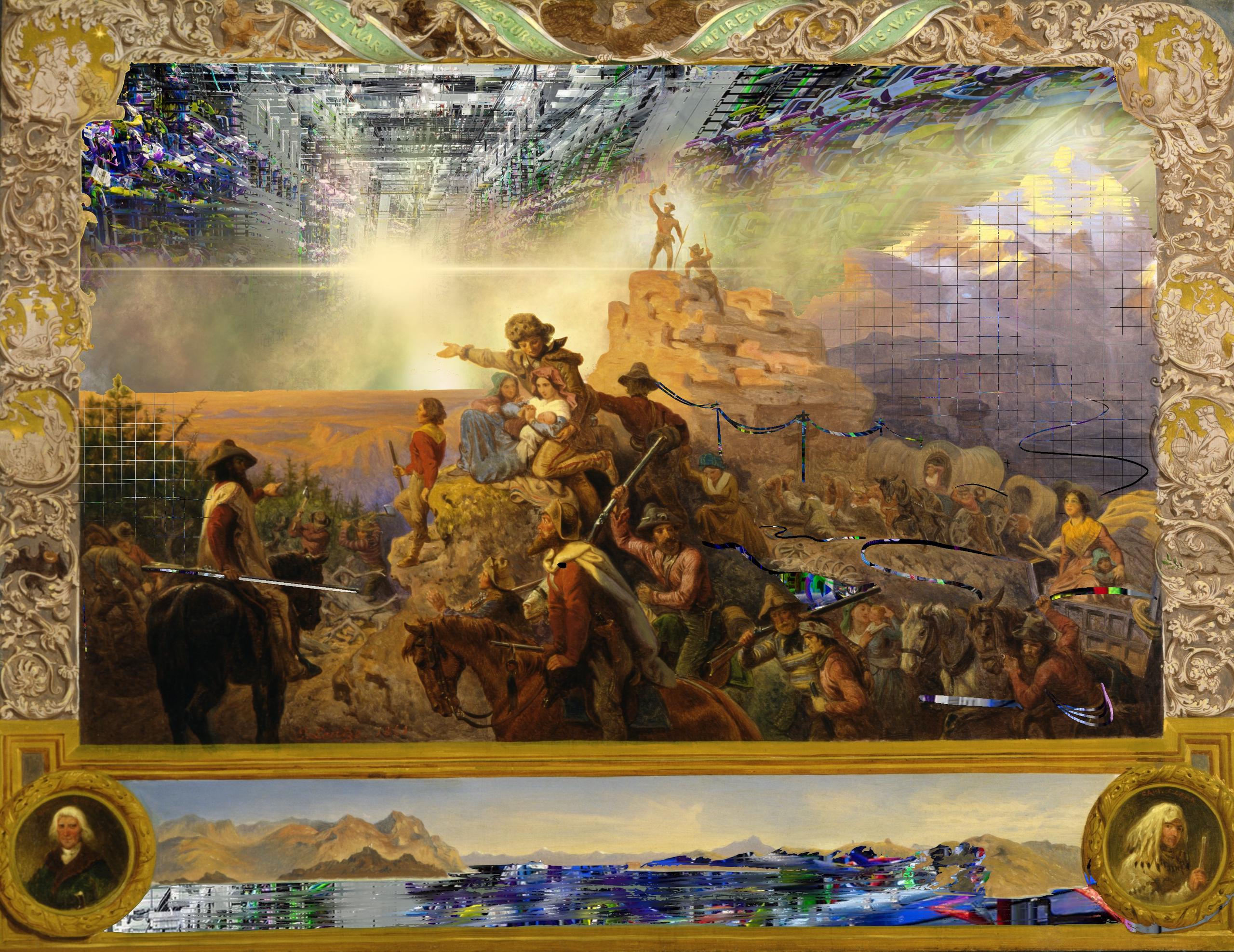
Banner image: Hanna Barakat & Archival Images of AI + AIxDESIGN / https://betterimagesofai.org / https://creativecommons.org/licenses/by/4.0/
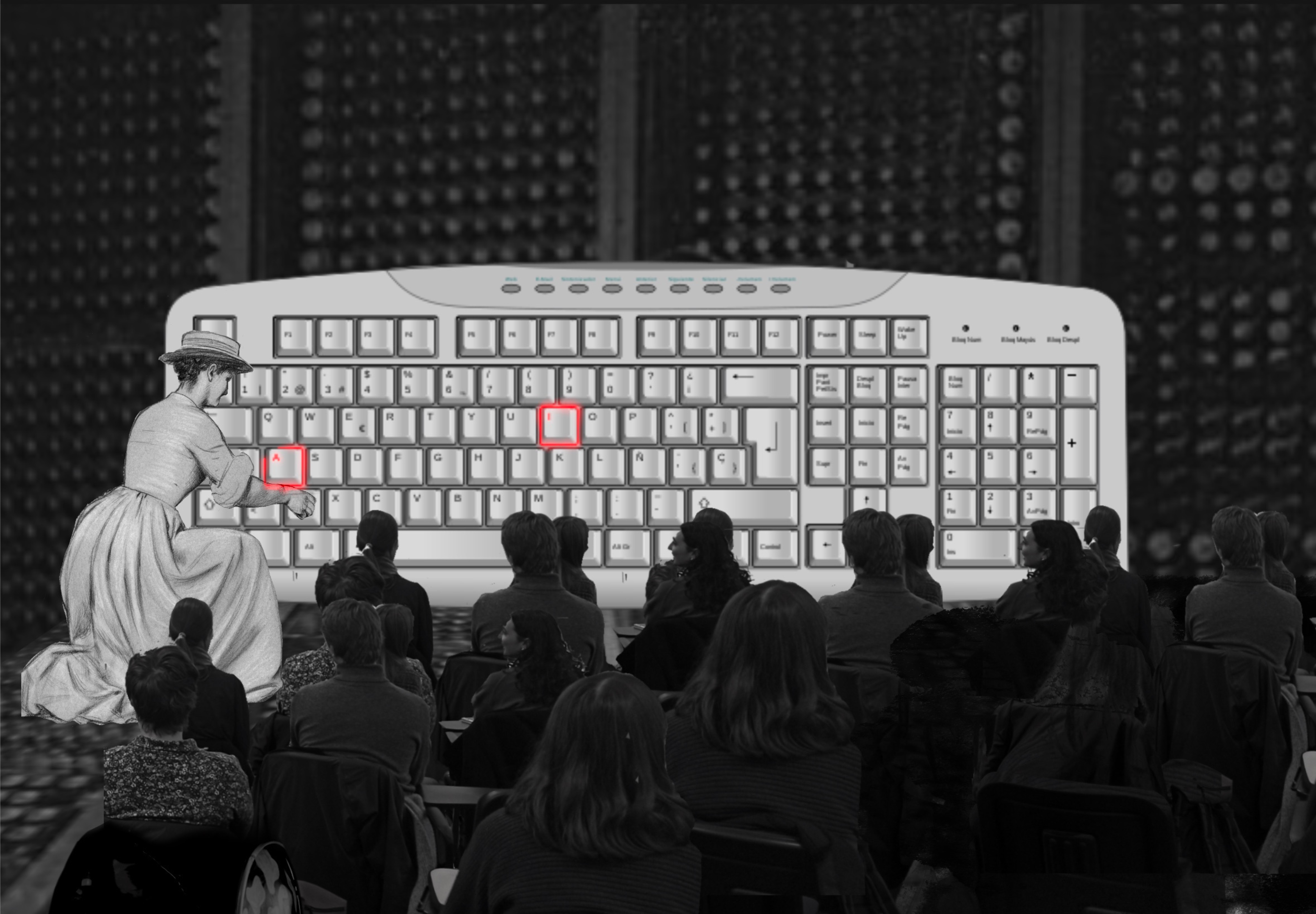
State of the Field: Hanna Barakat & Cambridge Diversity Fund / https://betterimagesofai.org / https://creativecommons.org/licenses/by/4.0/
Infrastructures & Impacts: Gloria Mendoza / https://betterimagesofai.org / https://creativecommons.org/licenses/by/4.0/
Digital Authoritarianism & Democratic Backsliding: Marcin Wilkowski / https://betterimagesofai.org / https://creativecommons.org/licenses/by/4.0/
Digital (Dis)connection: Emily Rand & LOTI / https://betterimagesofai.org / https://creativecommons.org/licenses/by/4.0/
Climate & Environmental Information: Lone Thomasky & Bits&Bäume / https://betterimagesofai.org / https://creativecommons.org/licenses/by/4.0/
Social Media Bans & Child Online Safety: Deborah Lupton / https://betterimagesofai.org / https://creativecommons.org/licenses/by/4.0/
AI & Information Integrity: Gloria Mendoza / https://betterimagesofai.org / https://creativecommons.org/licenses/by/4.0/